

Hong Kong Council on Smoking and Health (COSH) and academics from The University of Hong Kong and The Chinese University of Hong Kong today released the latest tobacco control survey and study, analysing the projected impacts of the new phase of tobacco control measures. Research findings from The University of Hong Kong indicate that the public is exposed to second-hand smoke at a very high rate in outdoor settings, and that there is a strong social consensus on the need to strengthen tobacco control. Nearly 90% of respondents support expanding smoke-free areas and expect the Government to extend smoking bans to more outdoor public spaces, in order to better safeguard public health. Meanwhile, projections by the JC School of Public Health and Primary Care of the Faculty of Medicine at The Chinese University of Hong Kong show that increasing tobacco duties, together with regular annual adjustments, can reduce smoking prevalence, delivering immediate short-term results while remaining effective over the long-term.
The Tobacco Control Legislation (Amendment) Bill 2025 was passed earlier, and the Government subsequently gazetted the Tobacco Control Legislation (Amendment) Ordinance 2025 (Ordinance) on 19 September 2025. The new phase of tobacco control measures has since been implemented. The Government will also continue to explore medium- and long-term tobacco control measures.
Mr Henry TONG Sau-chai, COSH Chairman, said “COSH urges the Government to expedite the introduction of implementation details for each phase of the measures, and adopt a multi-pronged approach to stop the spread of smoking harms and protect public health.” Mr TONG added that continuous policy monitoring and regular assessments, supplemented by timely strengthening of tobacco control, are key to fostering the city’s progress towards a tobacco-free future. COSH will continue to cooperate with stakeholders across society to implement the Ordinance, enhancing efforts to prevent smoking among young people, further reduce smoking prevalence at all levels of society, and gradually achieve a ‘Tobacco-free Hong Kong’.
Three measures under the Ordinance have taken effect this month, including the extension of statutory no smoking areas (NSAs) to entrances and exits within specified premises, and the prohibition of smoking while queuing at boarding locations such as bus stops. The Tobacco Control Policy-related Survey 2025 (Survey) commissioned by COSH and conducted by The University of Hong Kong, found that nearly half of respondents reported second-hand smoke (SHS) exposure in the past 7 days. More than one-third of respondents reported SHS exposure at places other than home or the workplace, including but not limited to sidewalks, roadsides, and outdoor areas of restaurants and bars.
Prof Kelvin WANG Man-ping, Assistant Dean, Professional Development in Health Sciences, LKS Faculty of Medicine and Professor, The School of Nursing, The University of Hong Kong, said “The study reveals extremely high levels of SHS exposure in outdoor areas among the public. The data indicates that individuals encountering SHS across multiple locations demonstrated higher rates of respiratory symptoms. SHS has been classified by the US Environmental Protection Agency as a Group A carcinogen and is recognised as a risk factor for lung cancer, heart disease, and stroke among nonsmokers. There is already strong public consensus, with nearly 90% of respondents supporting the extension of NSAs to enhance public health protection.”
The survey also notes strong public support for the new phase of short-, medium- and long-term tobacco control policies. For short-term measures, the Government will continuously review the effectiveness of increasing tobacco duties and the pace of future adjustments. The World Health Organization (WHO) has clearly identified raising tobacco prices and taxes as priority measures that can effectively curb tobacco use and reduce smoking. 74% of survey respondents agreed to a tobacco tax increase , while 71% support annual tobacco tax increase. Regarding the long-term ‘smoke-free generation’ policy, the survey indicates that 78% support a total ban on tobacco use and sale to people born in or after a specific year. 75% back a total ban on tobacco use and sales once smoking prevalence drops to 5% or below.
In addition, COSH commissioned the JC School of Public Health and Primary Care, Faculty of Medicine, The Chinese University of Hong Kong, to conduct a study on the projected impacts of tobacco control policies. The study shows that different tobacco control measures exert corresponding results in the short, medium and long term. Among these measures, if Hong Kong were to raise tobacco duties to 75% of the retail price, followed by annual increases of 5% over the subsequent 10 years, smoking prevalence could be significantly reduced in the medium term. As for the ‘smoke-free generation’ policy, which involves progressively raising the minimum legal age for purchasing tobacco with the ultimate aim of achieving long-term smoking cessation, it is identified as a particularly critical and powerful measure. Projections indicate that the impact of this single policy would strengthen progressively over time, reaching its maximum effect in the long term, with the magnitude of reduction continuing to be sustained and enhanced thereafter.
Dr CHEN Jing, Research Assistant Professor, JC School of Public Health and Primary Care, Faculty of Medicine, The Chinese University of Hong Kong, said “Drawing on global experience, the effectiveness of Hong Kong’s tobacco control policies is time sensitive. To sustain reductions in smoking prevalence, Hong Kong must implement medium- and long-term tobacco control measures as soon as possible, particularly the ‘smoke-free generation’ policy, in order to achieve continuous and long-term declines in smoking prevalence.”
Ms Vienna LAI Wai-yin, COSH Executive Director, said “To prevent the effectiveness of tobacco duties from being eroded over time by inflation and income growth, nearly 30 countries have already established mechanisms to increase tobacco duties on a regular basis. Many have further introduced automatic adjustment mechanisms that link tobacco duty increases to inflation, resulting in annual tax rises. COSH recommends that the Government should raise tobacco duties as soon as possible to reach the WHO’s recommended level of 75% of the retail price, and to implement annual increases thereafter.”
Dr Johnnie CHAN Chi-kau, COSH Vice-chairman added that if the Government were to comprehensively implement the new phase of tobacco control measures, while concurrently increasing tobacco duties to meet the WHO’s recommended level of 75% of the retail price and expediting the implementation of medium- and long-term tobacco control measures – including the ‘smoke-free generation’ policy, prohibiting smokers from smoking while walking – this would accelerate the city’s progress towards a ‘Tobacco-free Hong Kong’.
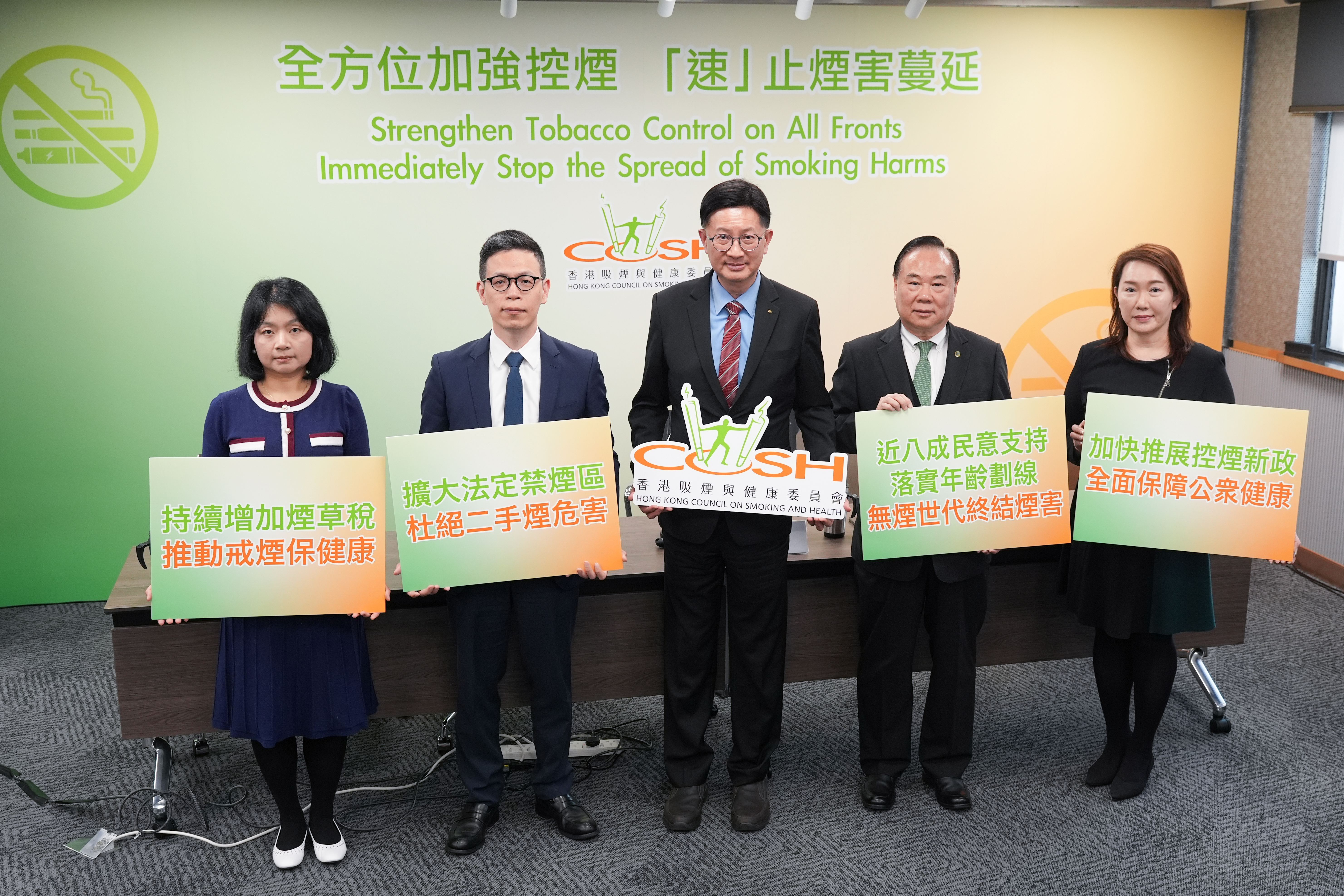
COSH and academic figures from The University of Hong Kong and The Chinese University of Hong Kong released the latest tobacco control survey and study.
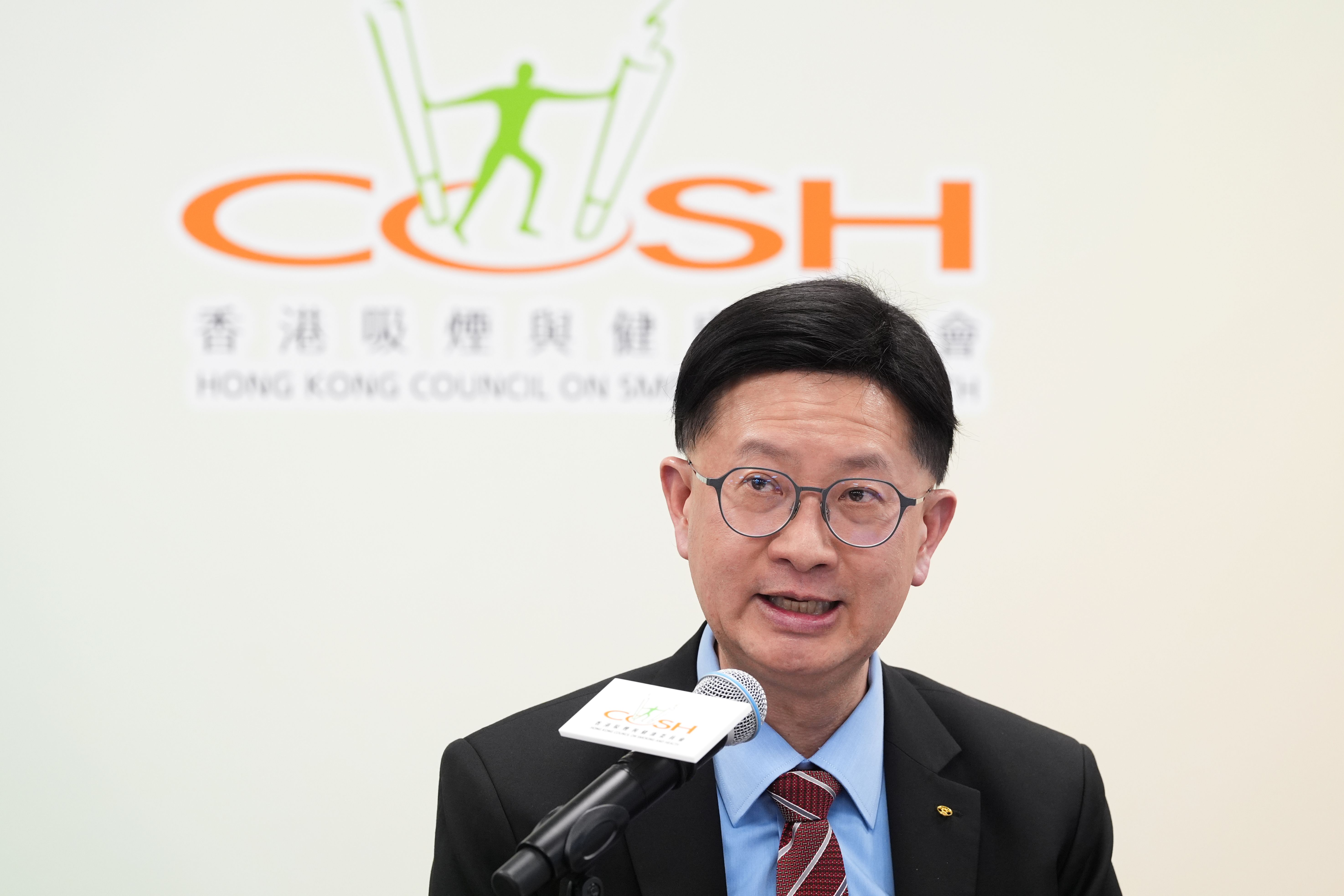
Mr Henry TONG Sau-chai, COSH Chairman said that COSH urges the Government to expedite the introduction of implementation details for each phase of the measures and adopt a multi-pronged approach to stop the spread of smoking harms and protect public health.
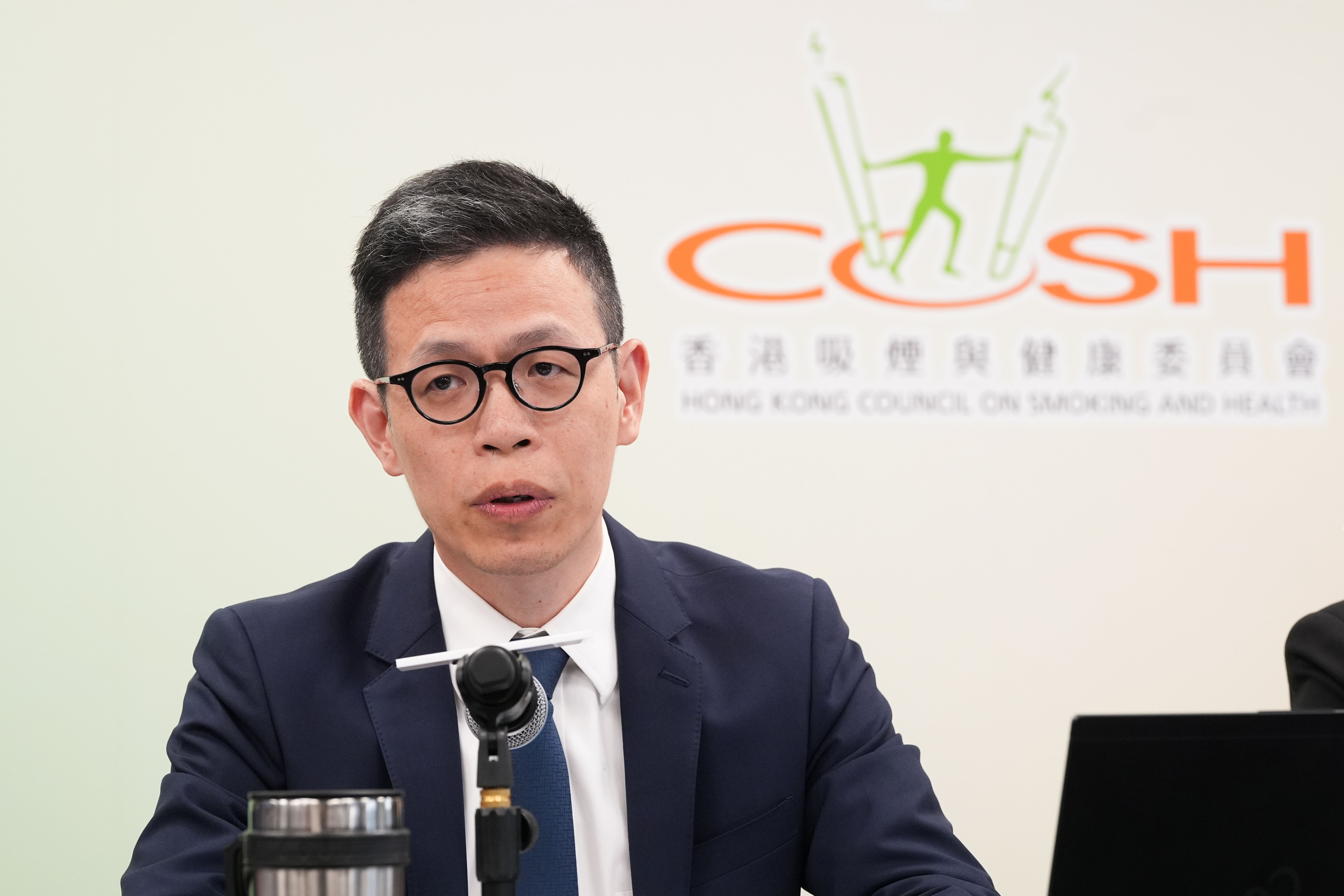
Prof Kelvin WANG Man-ping, Assistant Dean, Professional Development in Health Sciences, LKS Faculty of Medicine and Professor, The School of Nursing, The University of Hong Kong announced study findings and found that there is a strong social consensus on strengthening tobacco control. Nearly 90% of respondents support expanding No Smoking Areas (NSAs).
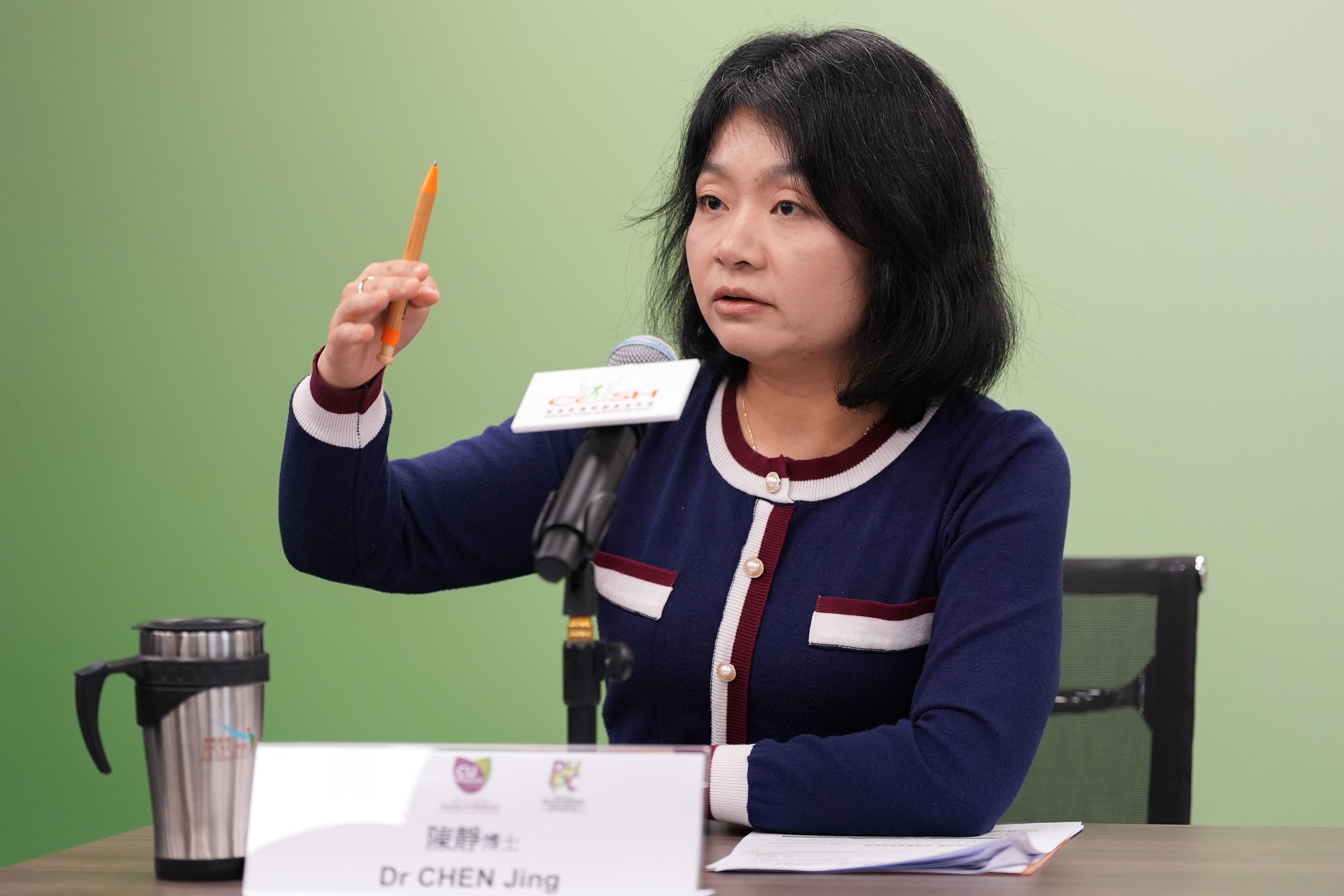
Dr CHEN Jing, Research Assistant Professor, JC School of Public Health and Primary Care, Faculty of Medicine, The Chinese University of Hong Kong said that to achieve sustained reductions in smoking prevalence, Hong Kong must implement medium- and long-term tobacco control measures as soon as possible, in particular the ‘smoke-free generation’ policy, so as to deliver continuous and long-term declines in smoking prevalence.
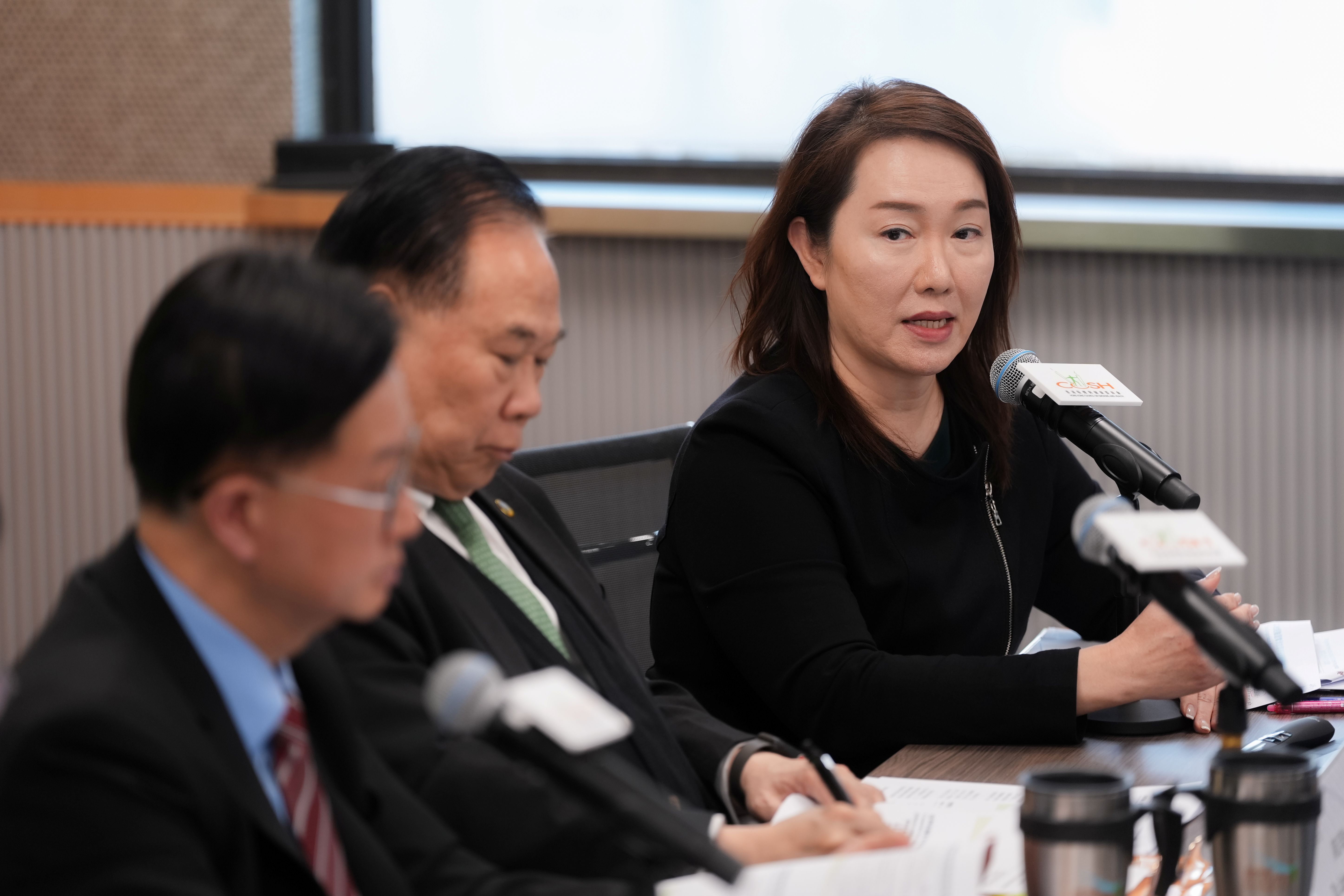
Ms Vienna LAI Wai-yin, COSH Executive Director stated that COSH urges the Government to raise tobacco duties as soon as possible to reach the WHO’s recommended level of 75% of the retail price, and to implement annual increases thereafter.
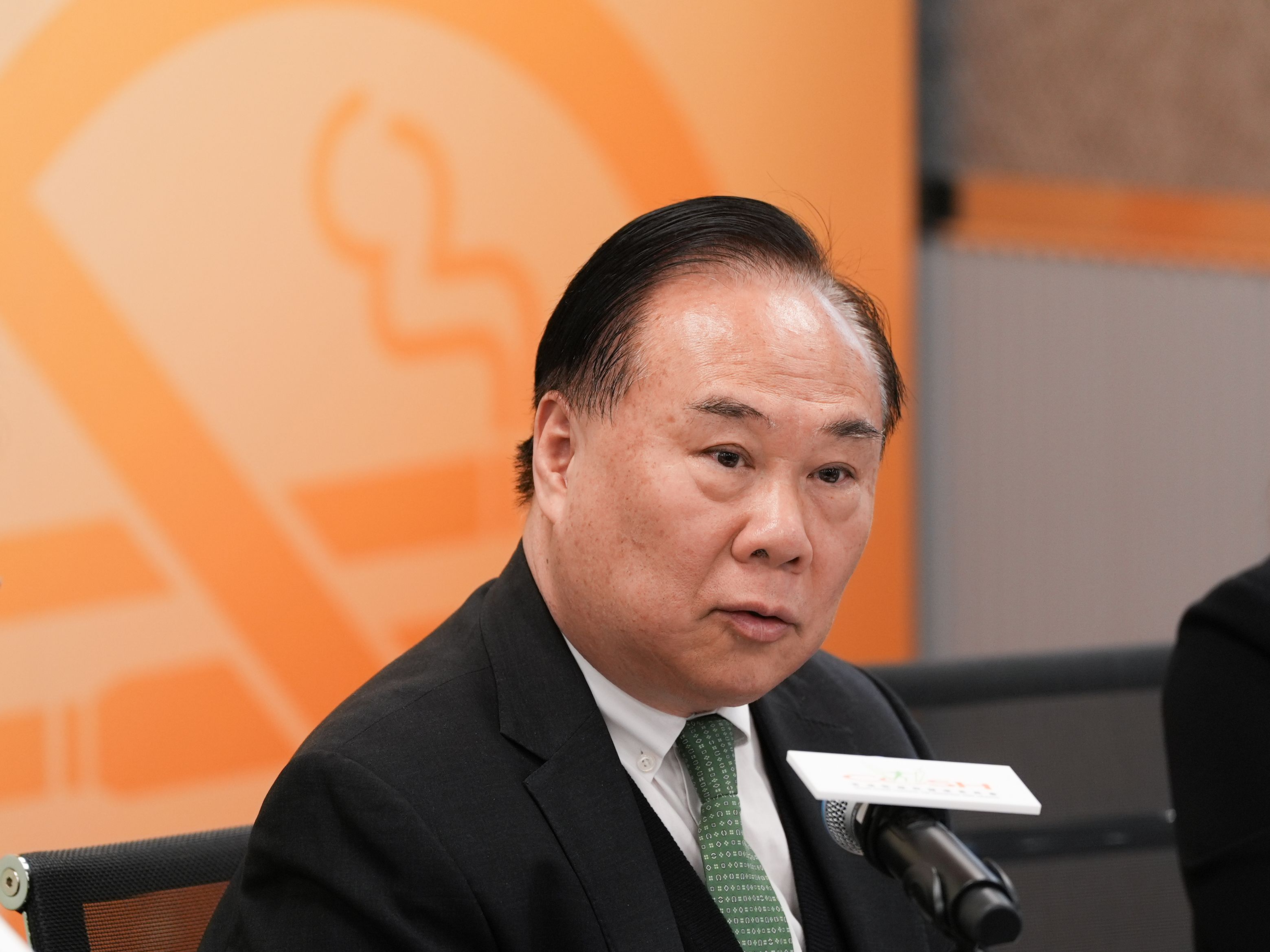
Dr Johnnie CHAN Chi-kau, COSH Vice-chairman said that expediting the implementation of medium- and long-term tobacco control measures, including the ‘smoke-free generation’ policy, would accelerate Hong Kong’s progress towards a ‘Tobacco-free Hong Kong’.